Clarke, A.P., Vannucchi, P., Morgan, J.P.
Mélanges
Much of my research focusses on mélanges — typically the mega-scale remnants of plate-boundary-scale faults — which are the archetypal heterogenous rock unit being composed of metre – hundreds of metre sized blocks of one rock type within a matrix of another. I have worked on the Chrystalls Beach Mélange in New Zealand, the Osa Mélange in Costa Rica, and the Gwna Mélange in Wales. Most of my research on these rock units involves mechanical strength tests and micro-structural analysis to determine the present and past rheological relationships between blocks and matrix.
Relevant publications
Clarke, A.P.
Heterogeneous input in a subduction system & its effect on plate boundary processes: Structural analysis of the Osa Mélange, SW Costa Rica
Vannucchi, P., Clarke, A.P., de Montserrat, A., Ougier-Simonin, A., Aldega, L., Morgan, J.P.
A strength inversion origin for non-volcanic tremor
Selected Figures
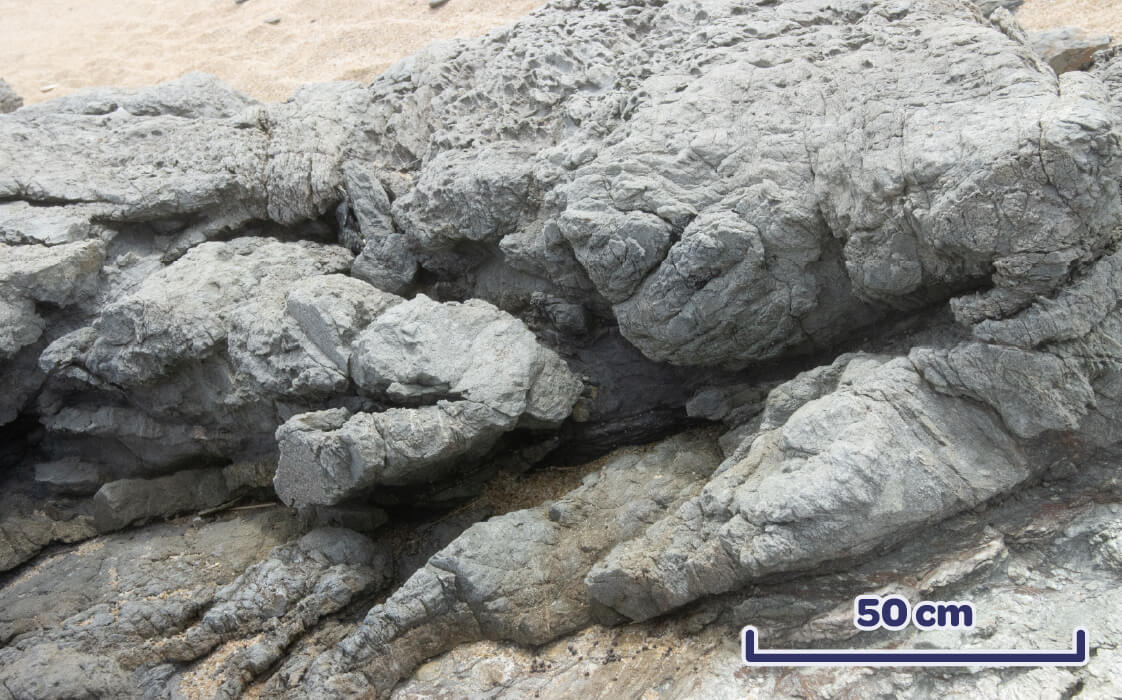

Isoclinally folded block
Some blocks are isoclinally folded but dominant structural style is long-axis extension.
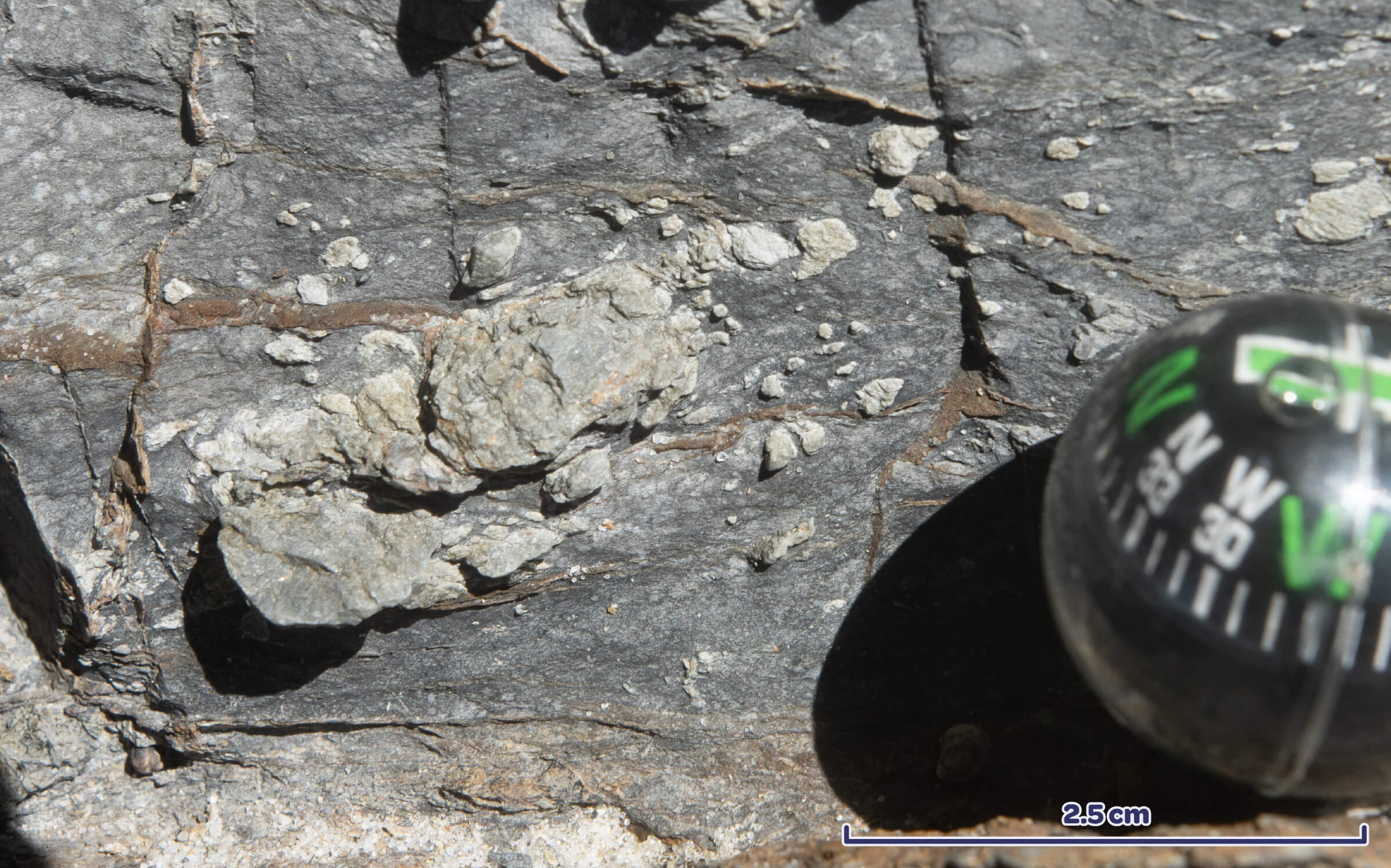
Jigsaw fit
Fragmented clast with jigsaw fit between clasts.
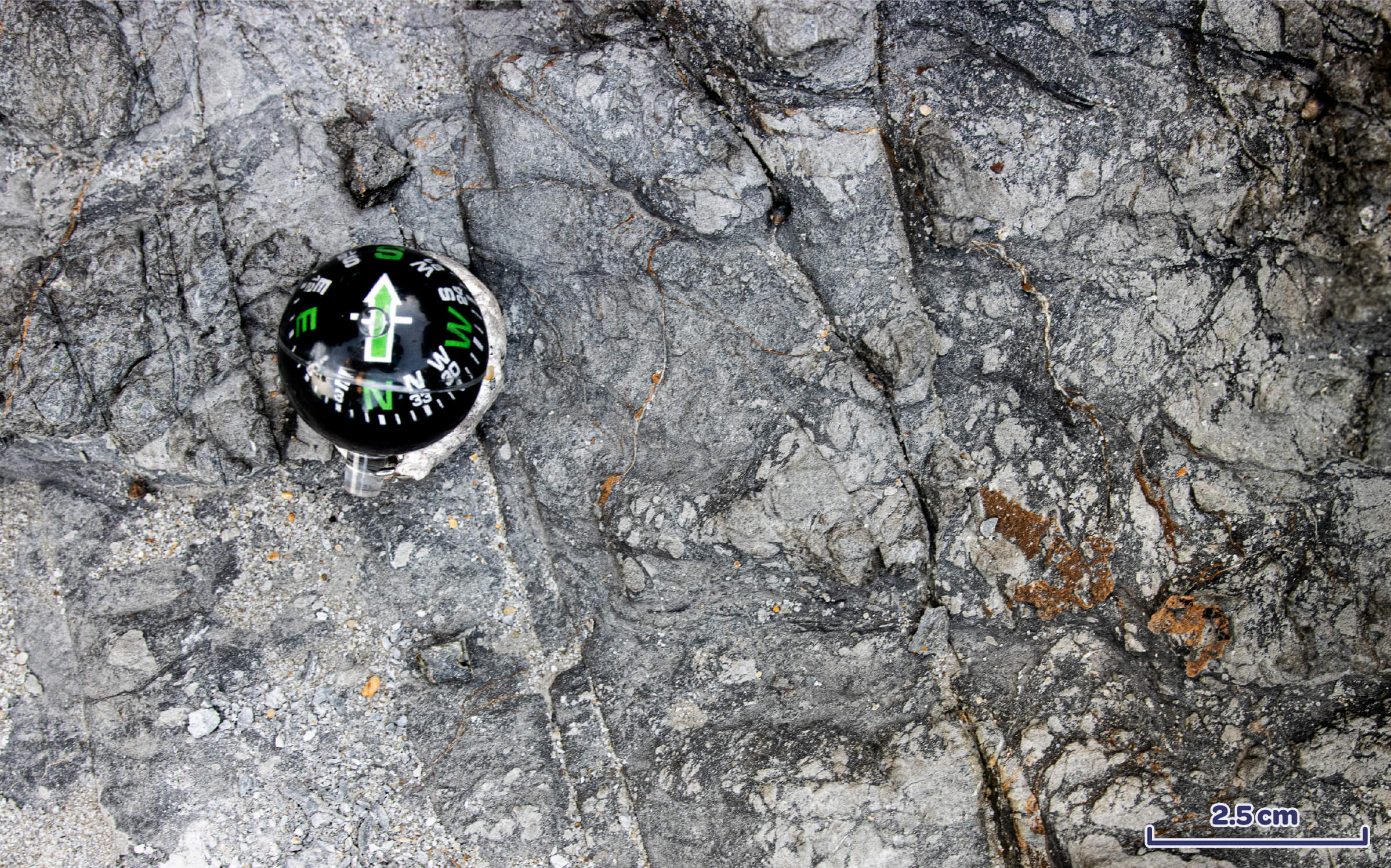
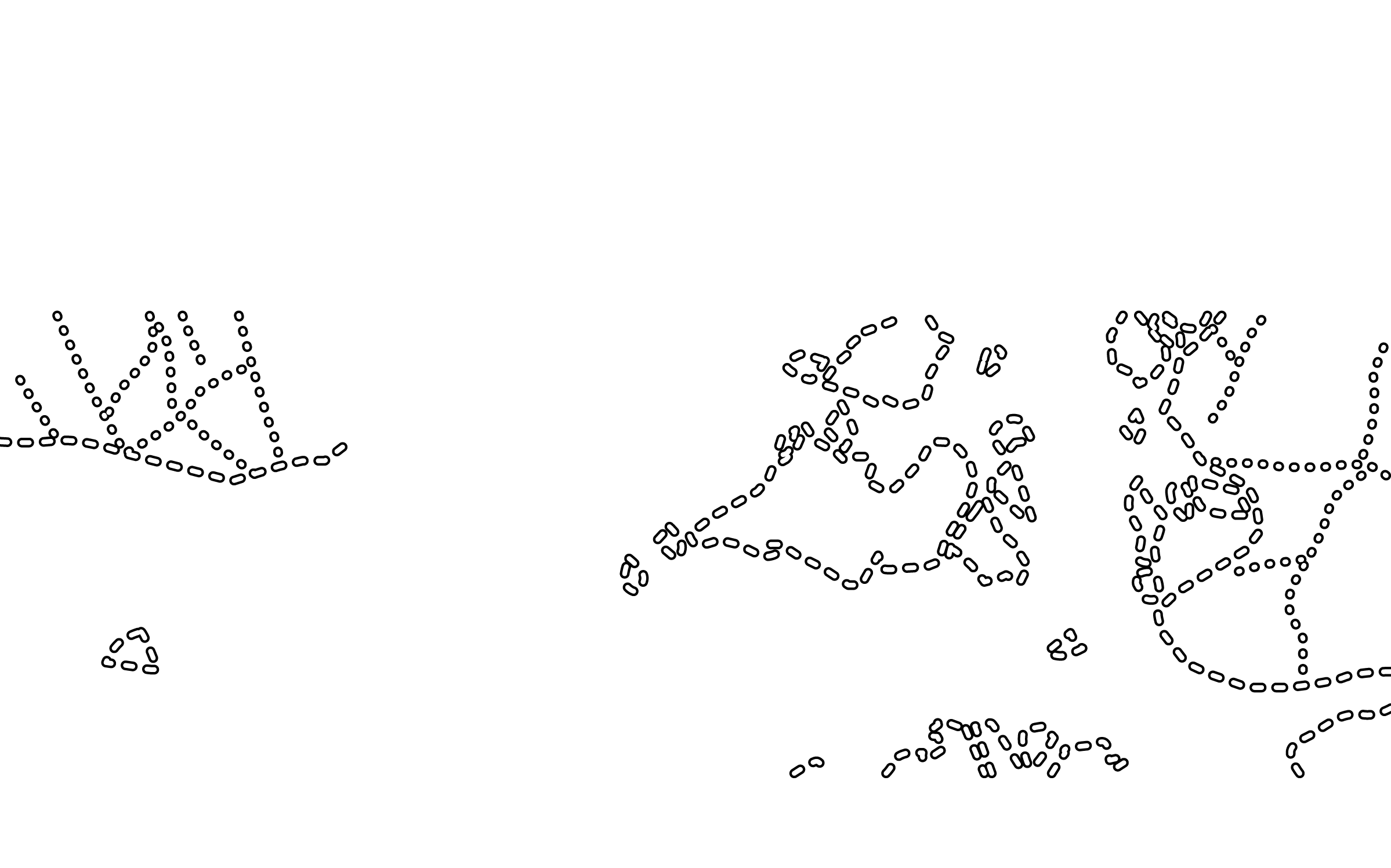
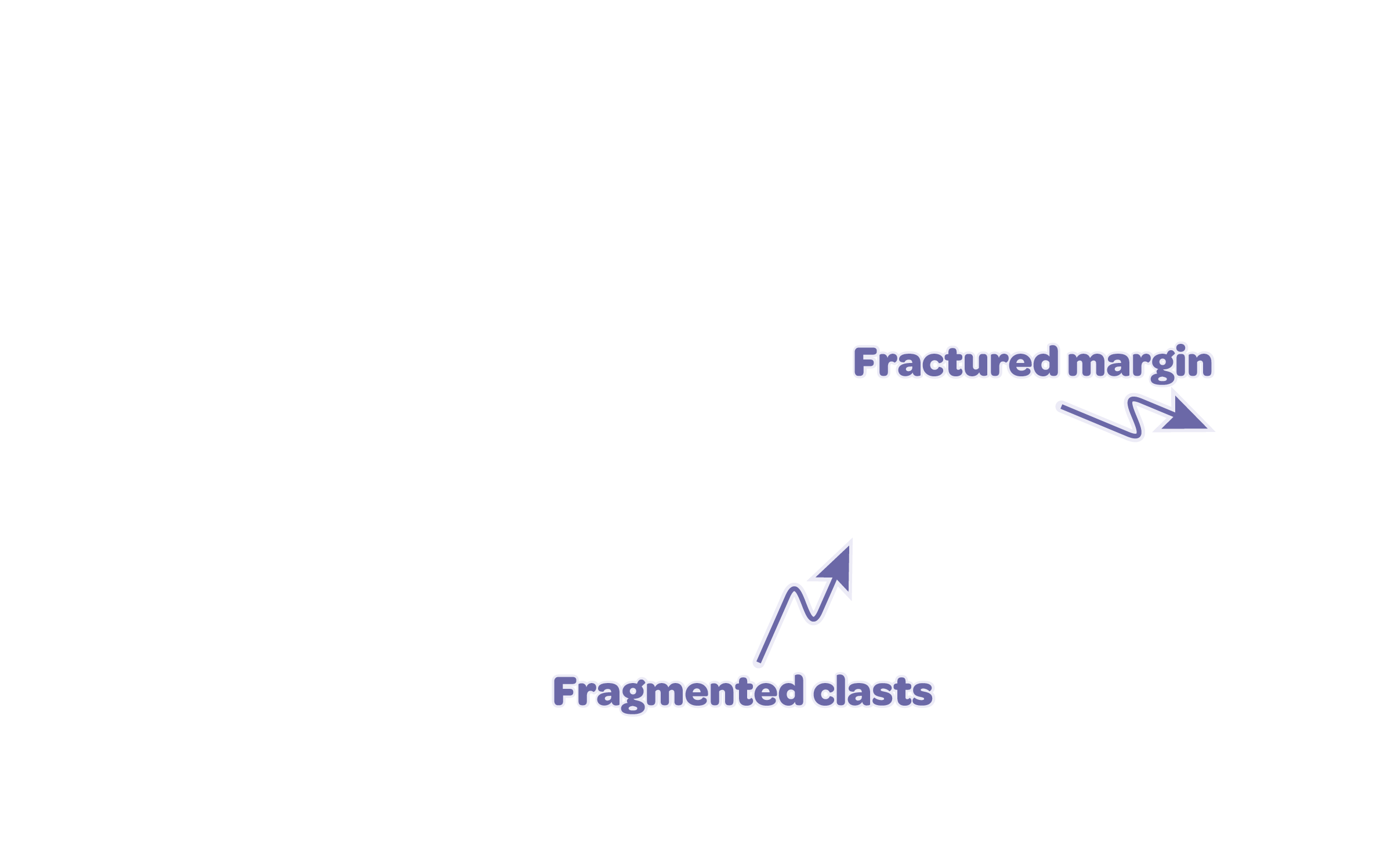
Sandstone mega-block with fragmented margin.
Sandstone mega-block with fragmented margin.
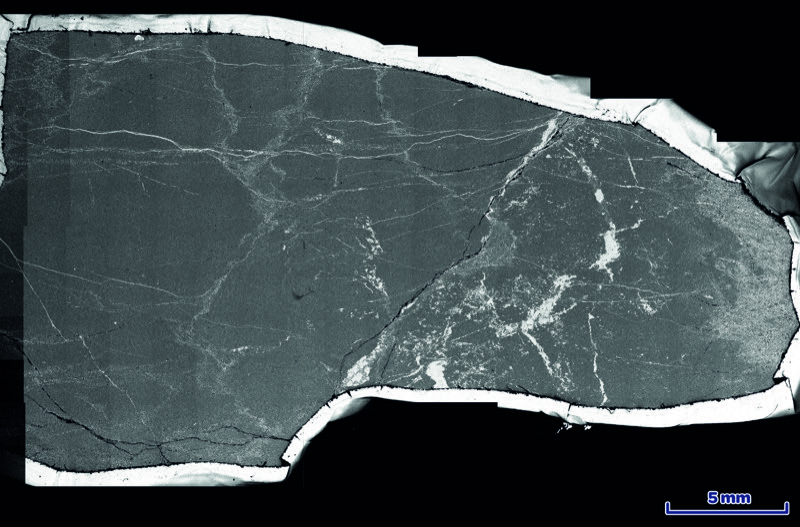
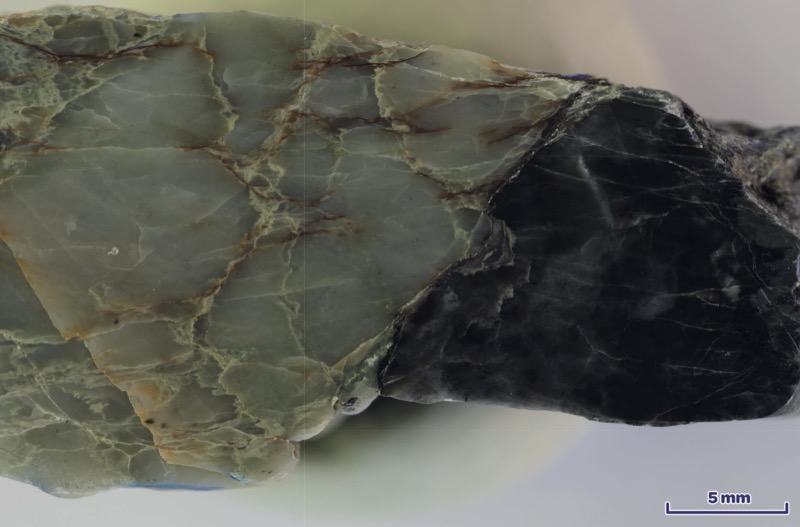
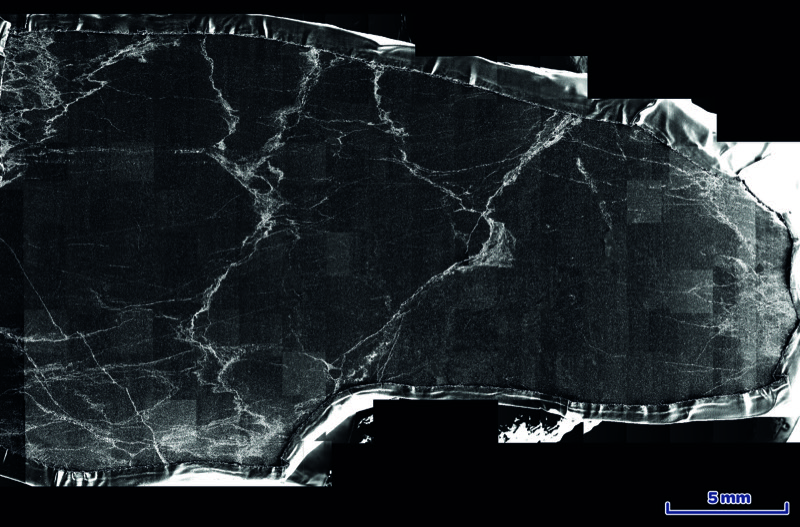
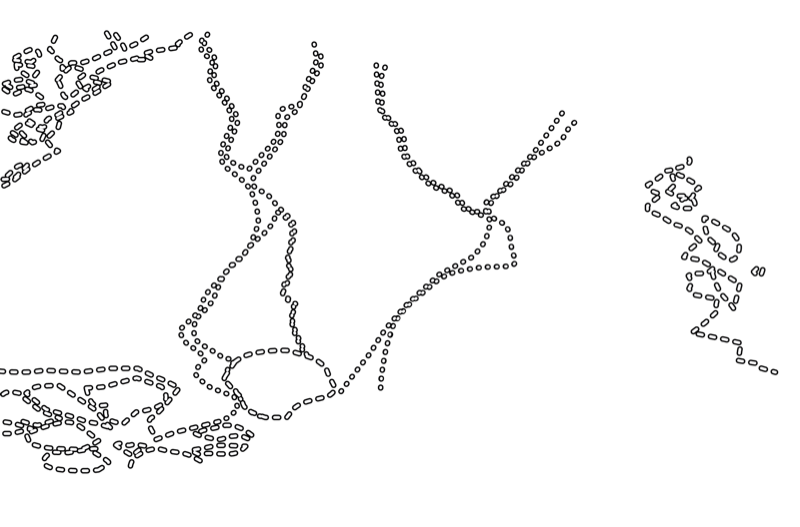
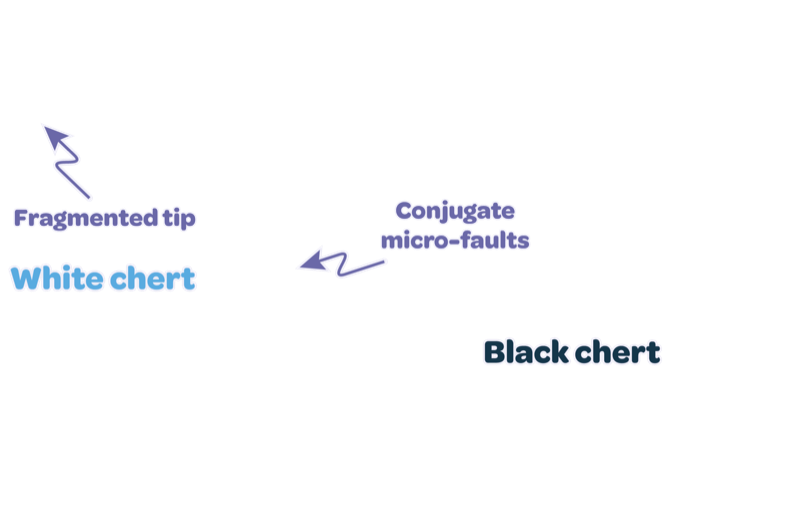
Fragmented chert block
Interpreted SEM-BSE image of a fragmented chert block showing jigsaw fit at the tips & conjugate micro-faults.
Fragmented sandstone mega-block
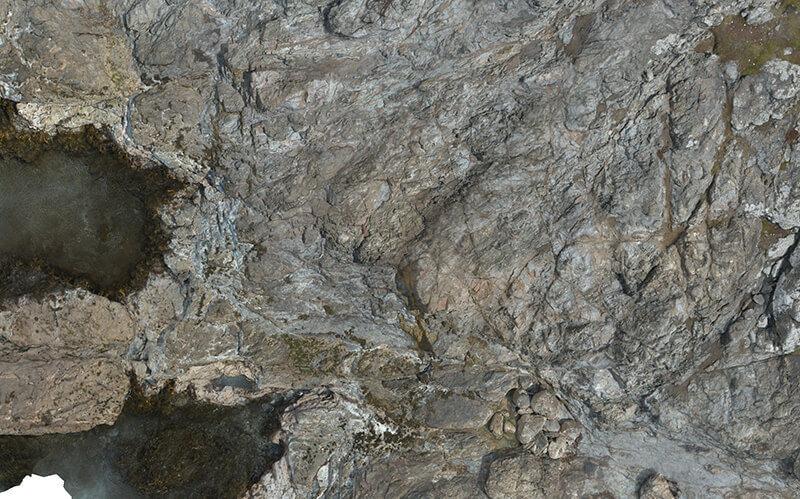
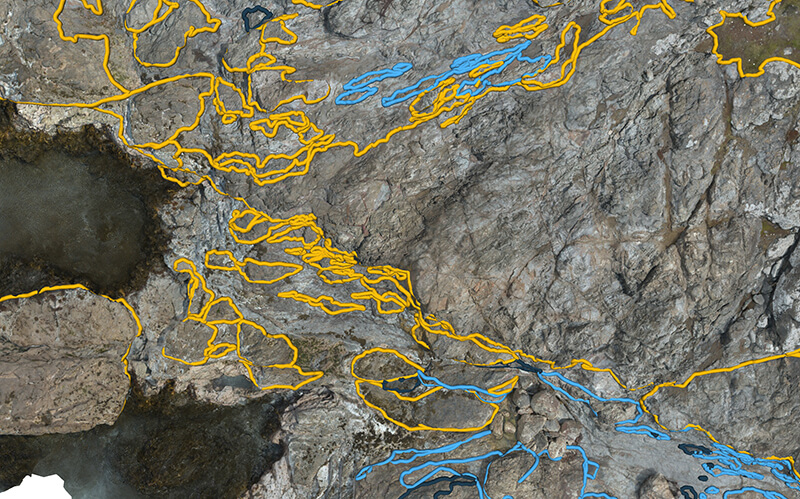
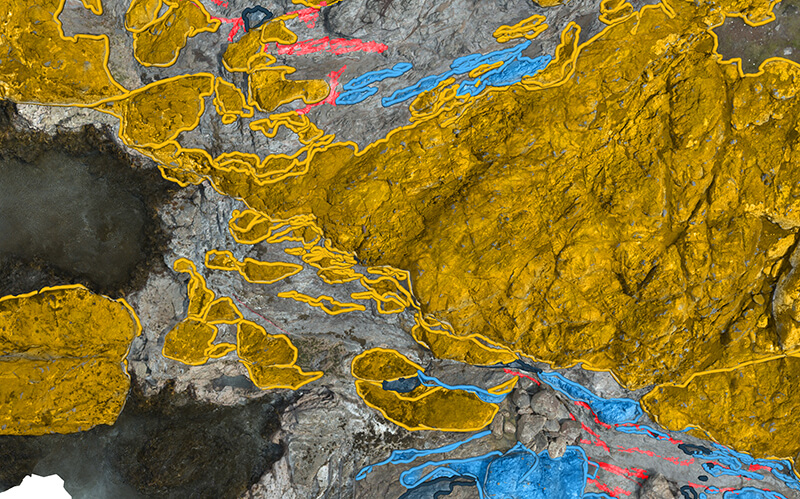
Interpreted photogrammetric model of fragmented sandstone mega-block.
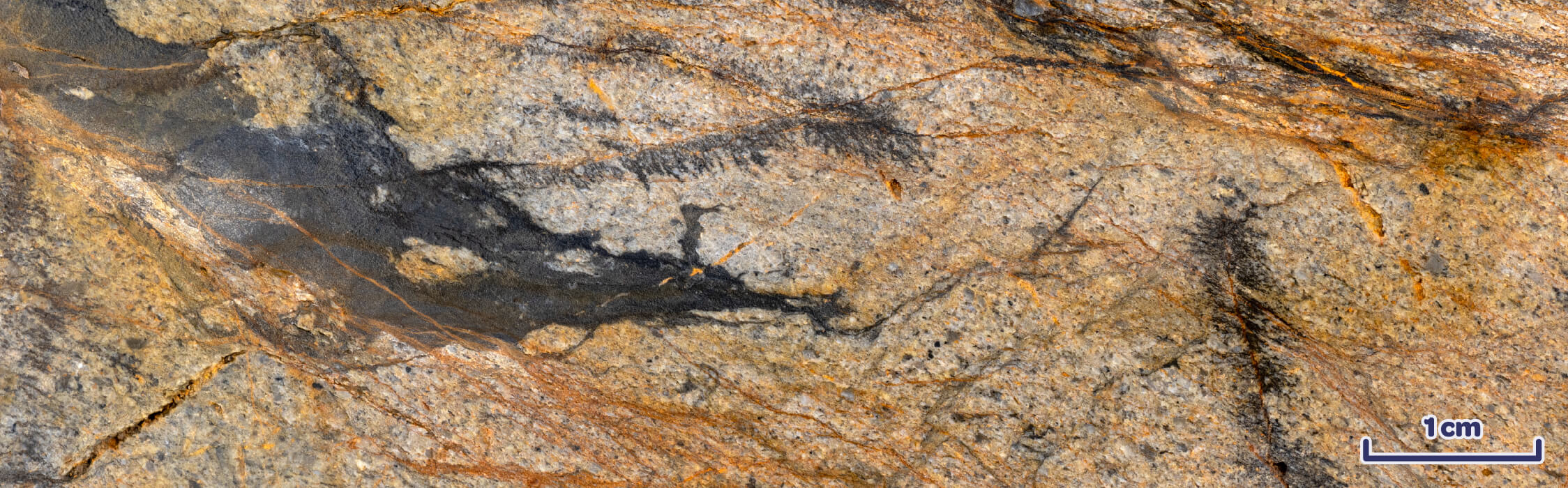


Injectite within sandstone block
Injectite of mudstone deep within the core of a sandstone block indicates both that the mud was fluidised and that sand was weakly cohesive & able to both fracture and flow.
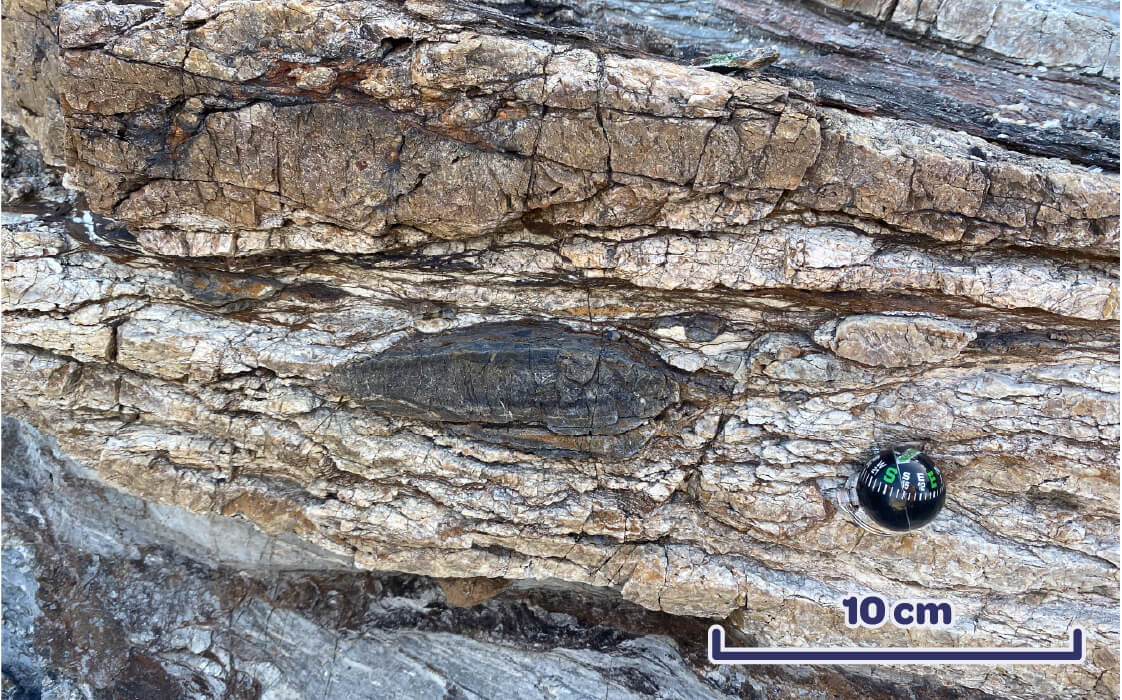

Internal boudin of black chert within block of white chert
Internal boudin of black chert within block of white chert featuring internal boudinage & anastomosing fracture cleavage. As this mélange was never subducted to depths of quartz crystal-plasticity, this ductile deformation must have occured prior to lithification.
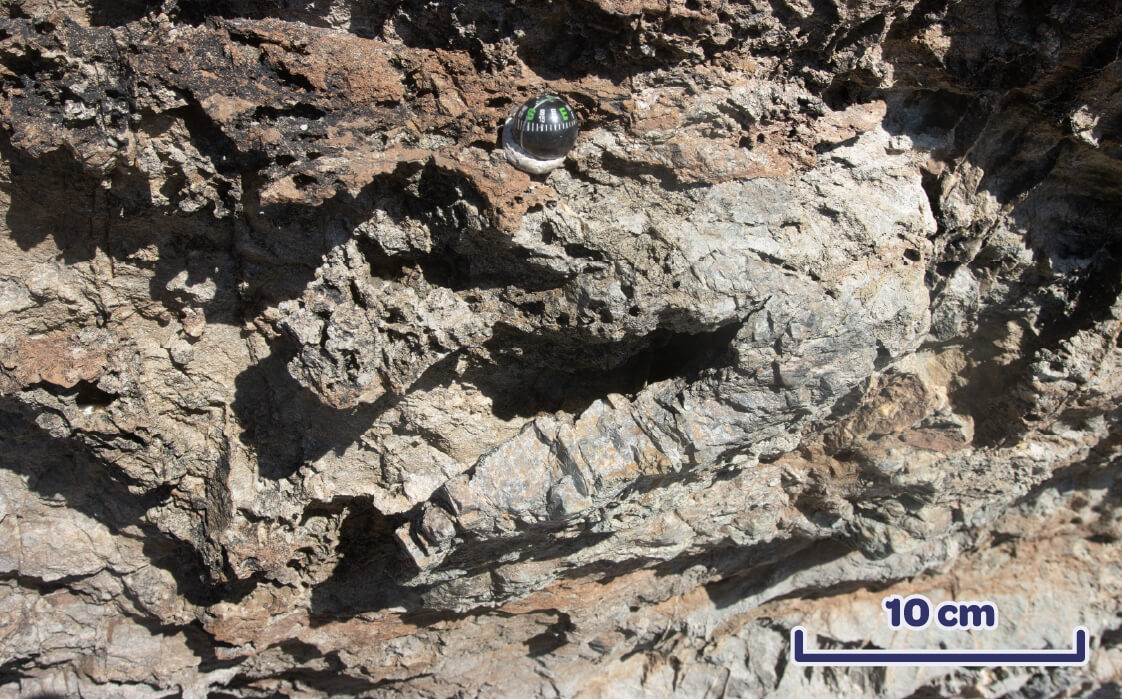

Block with internal folding
Block with an internal isolated isoclinal fold hinge indicating folding and stratal disruption occured within the lithologies that would become blocks, possibly predating mélange formation.
Chystalls Beach, New Zealand
Interpreted photogrammetric model of Chystalls Beach, New Zealand
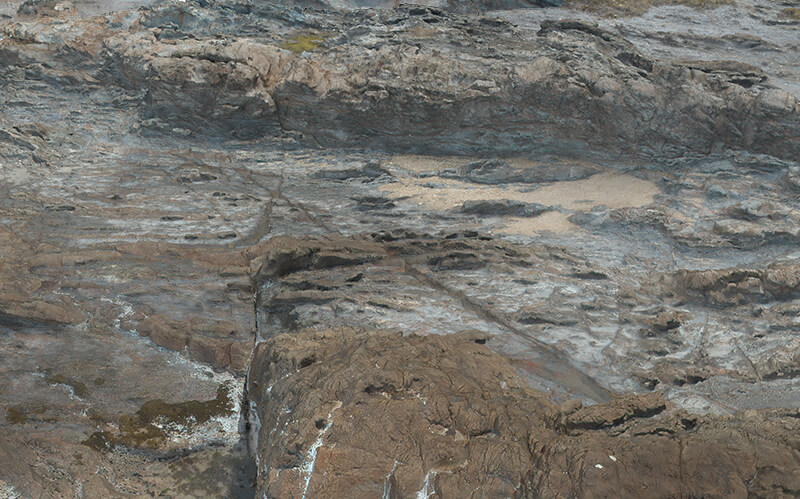
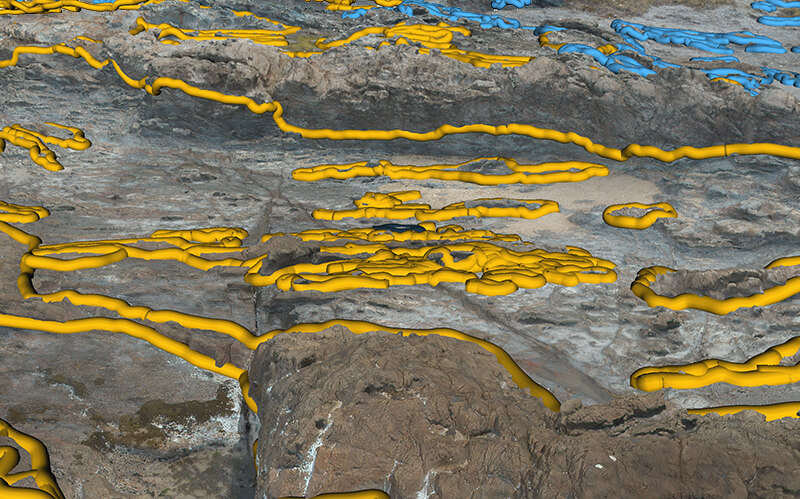
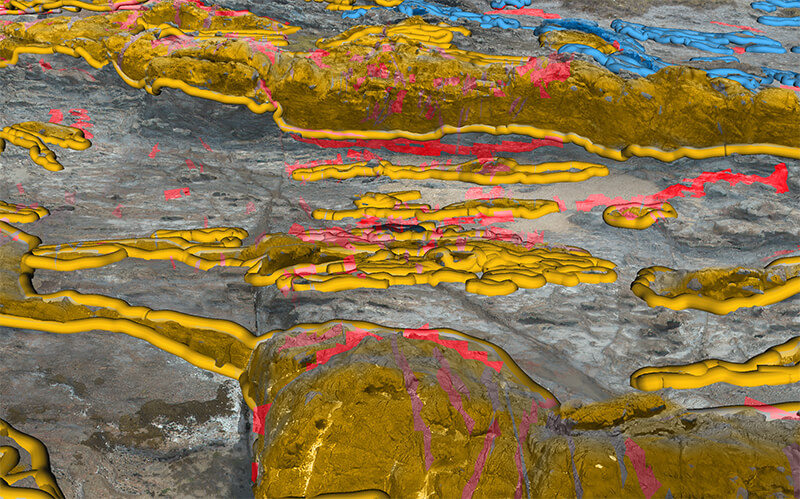
No association between block-on-block contacts and increased fracture density
Interpreted photogrammetric model showing no association between block-on-block contacts and increased fracture density. This challenges the notion that primarily blocks break in force-chains due to block-on-block jamming. Instead, the densest vein networks occur in proximity to thick stepped veins.
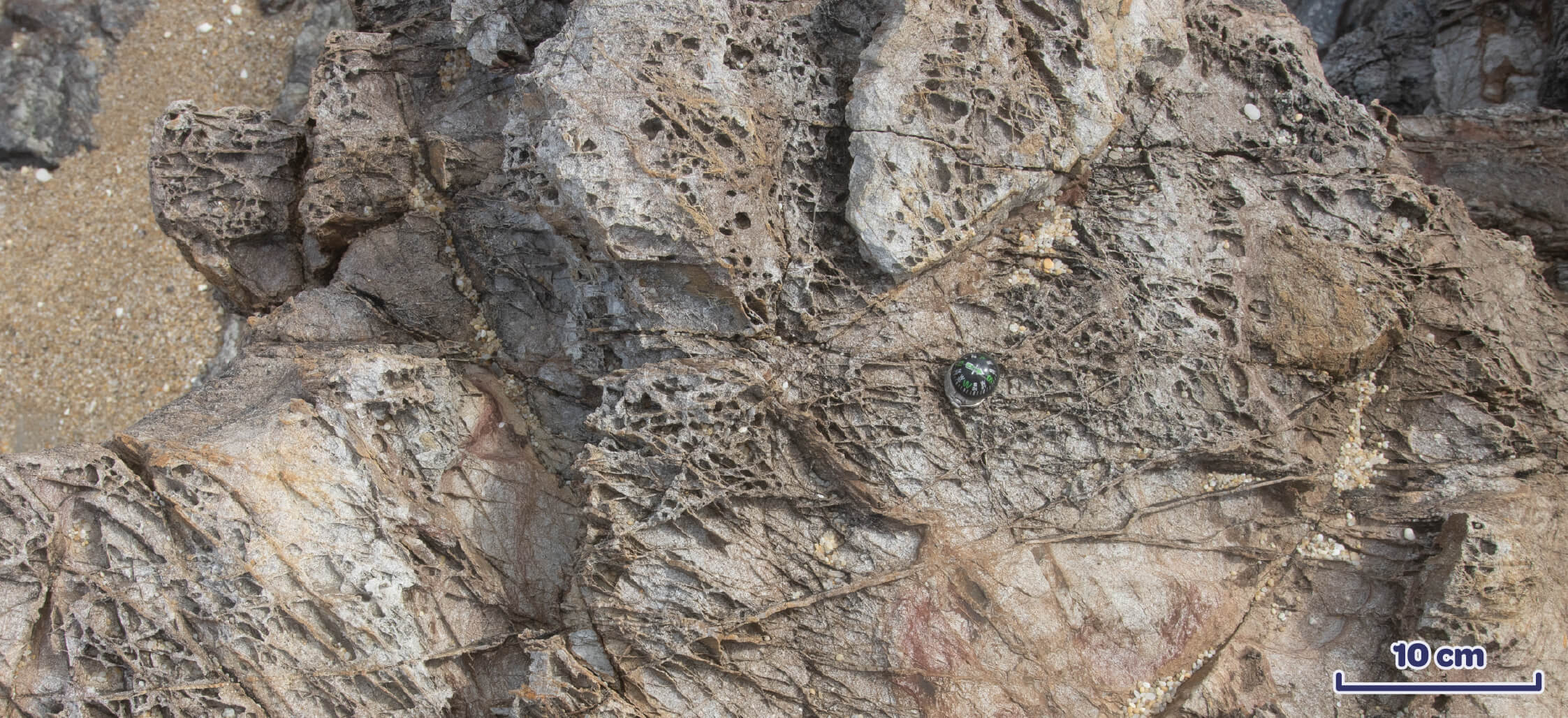
Stockwork veins in a sandstone block
Dense mesh of straight veins within a sandstone block in stockwork pattern consistent with low effective stresses due to fluid over-pressure, possibly due to seismogenic fluid-pressure pulses. In 3D, these veins are more commonly at a high angle to the block long-axes.
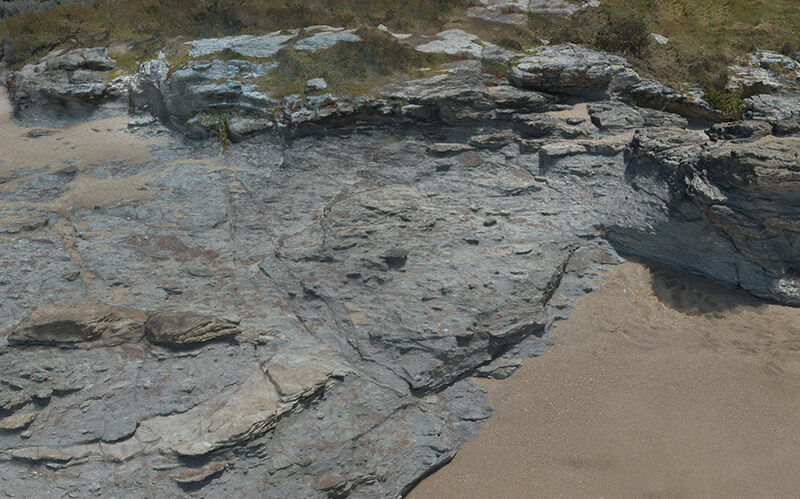
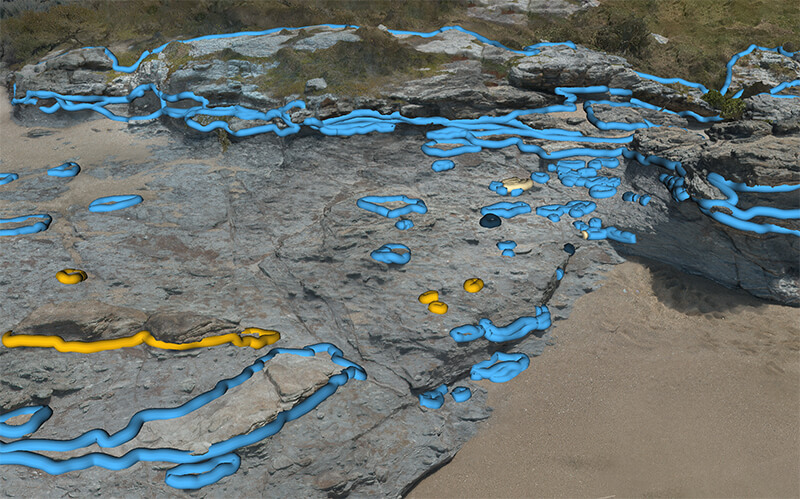
Anastomosing network of stepped shear veins.
Interpreted photogrammetric model showing anastomosing network of stepped shear veins. These form a network with straight veins in blocks at a high angle to block long axes.
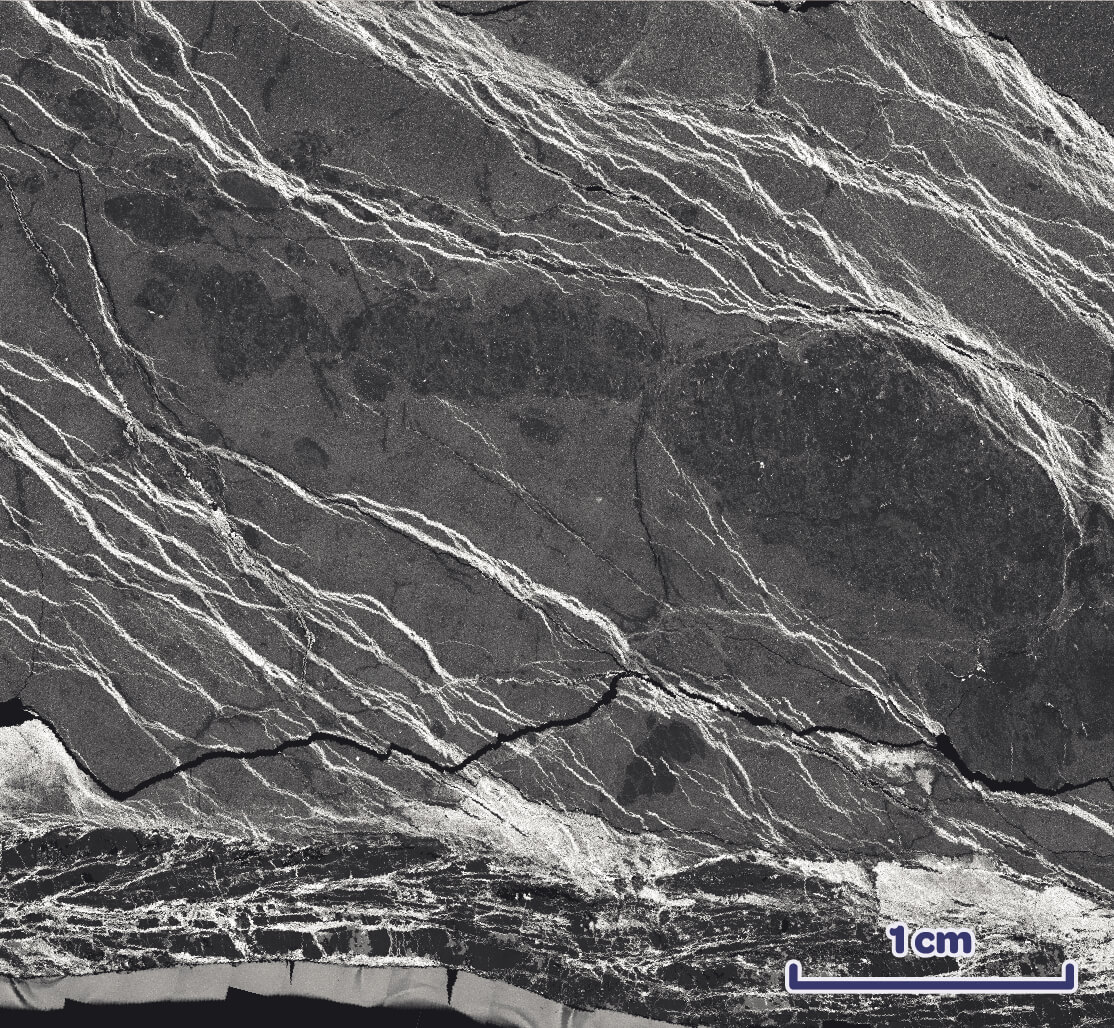
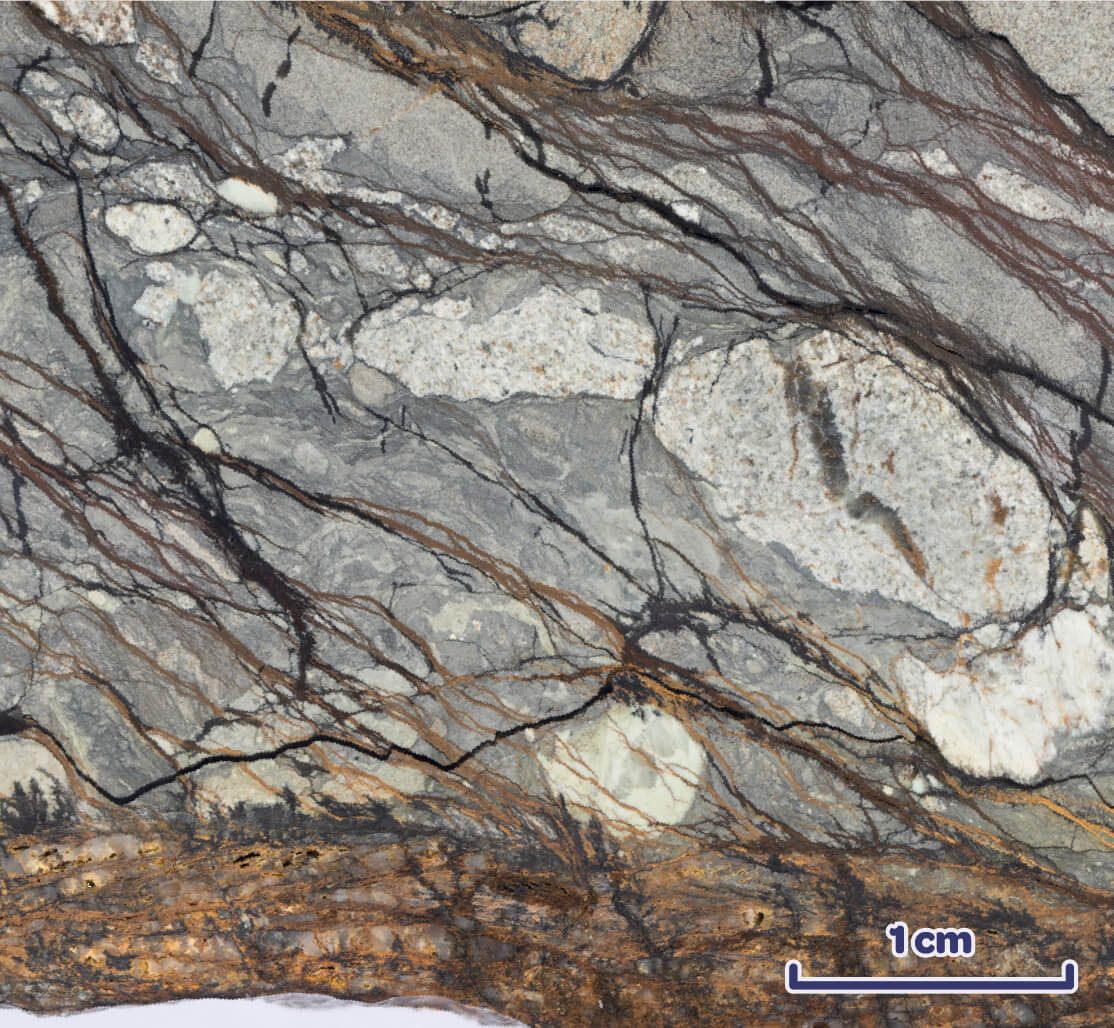
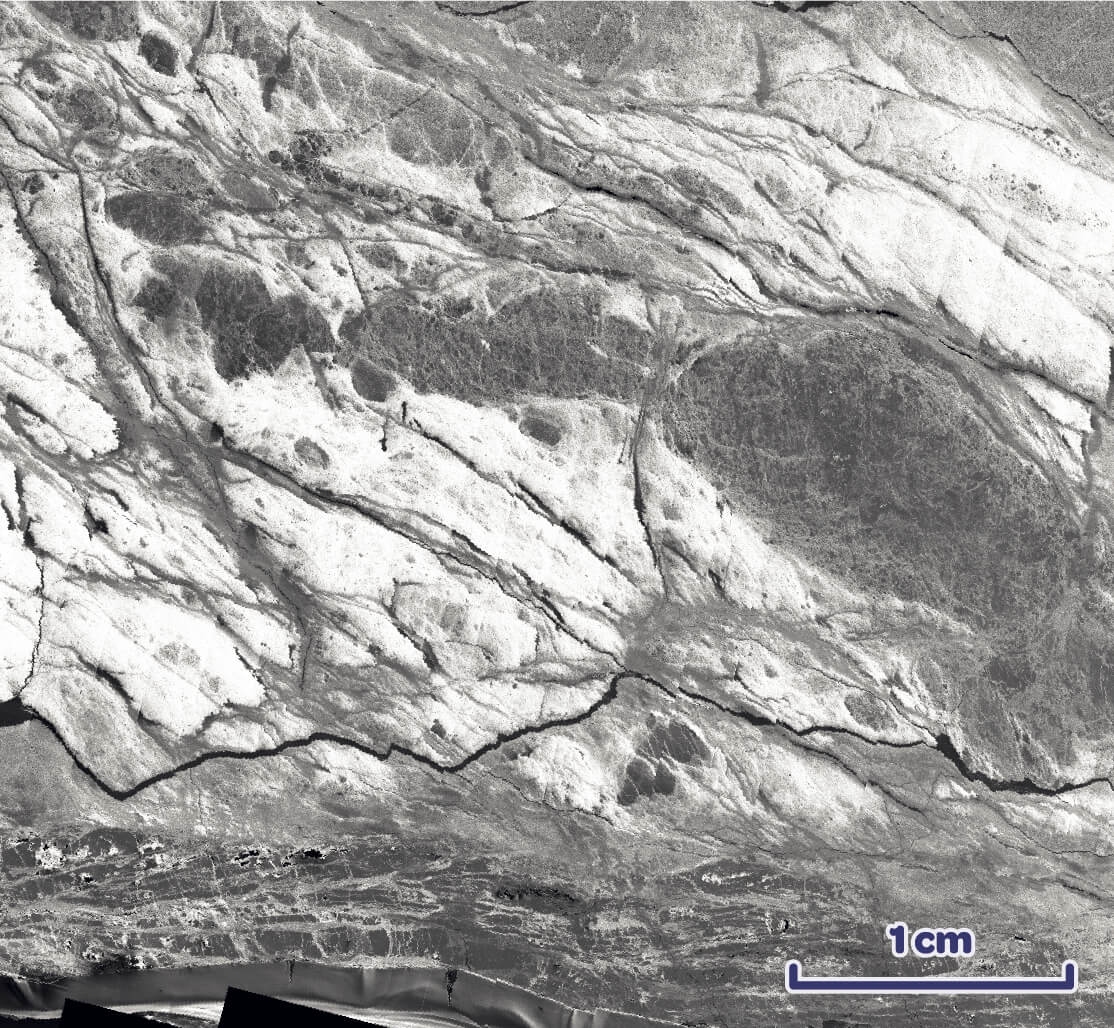

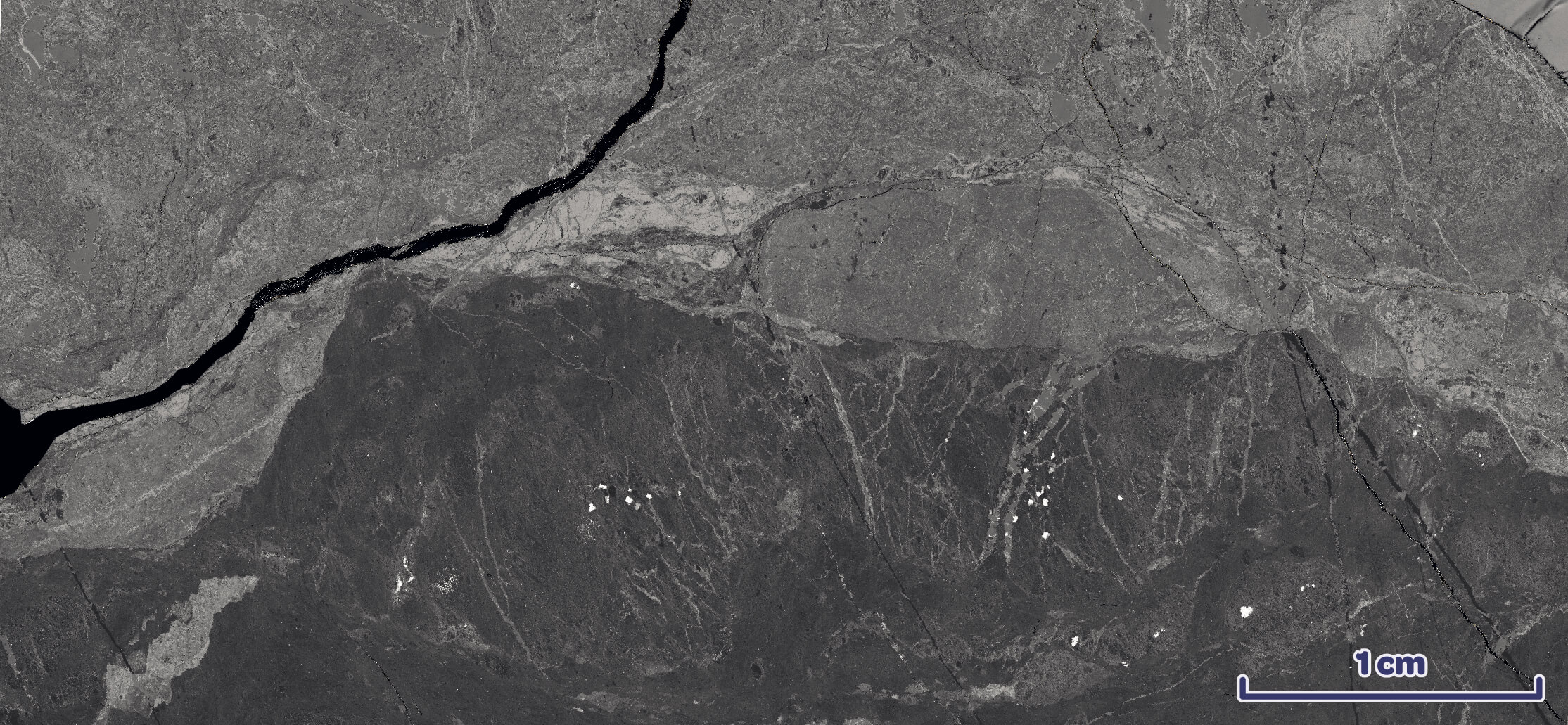
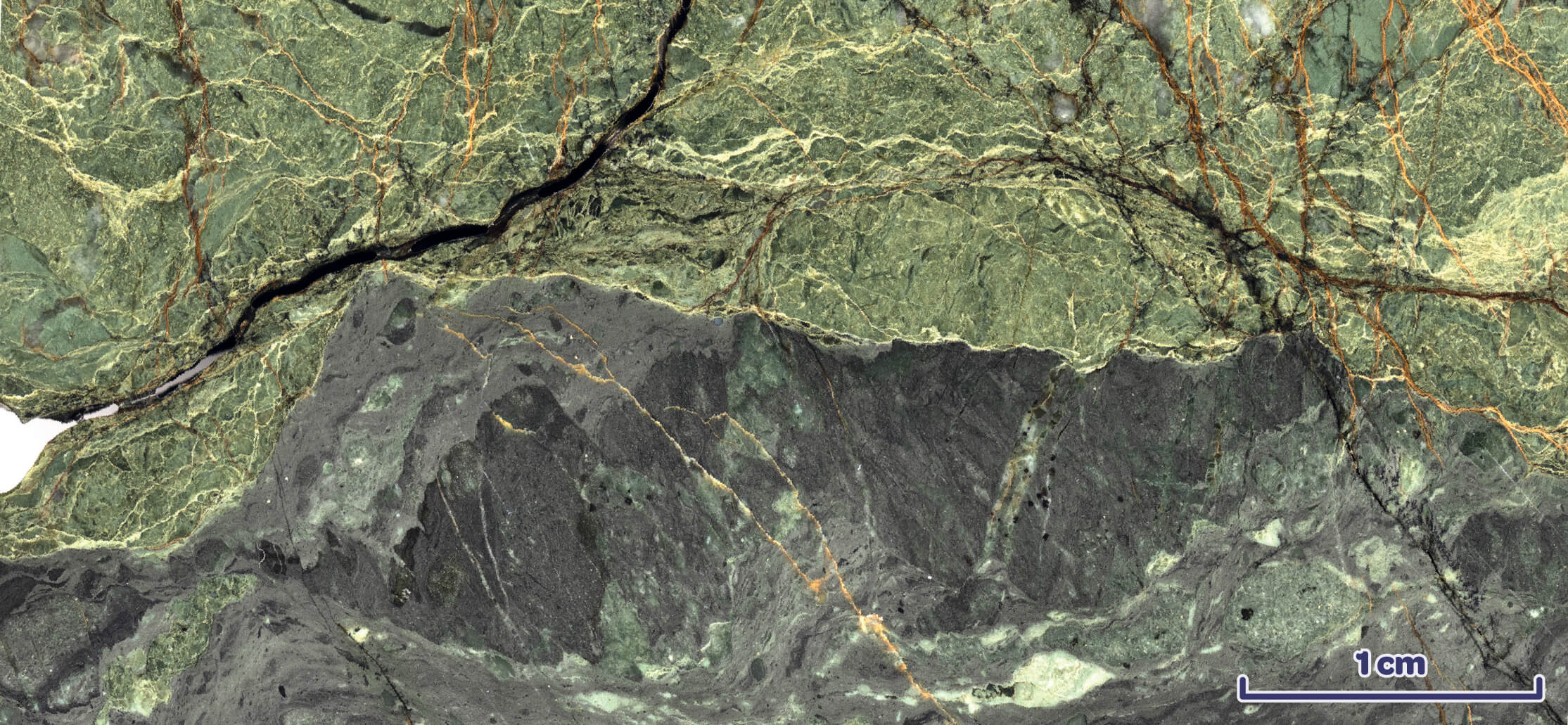
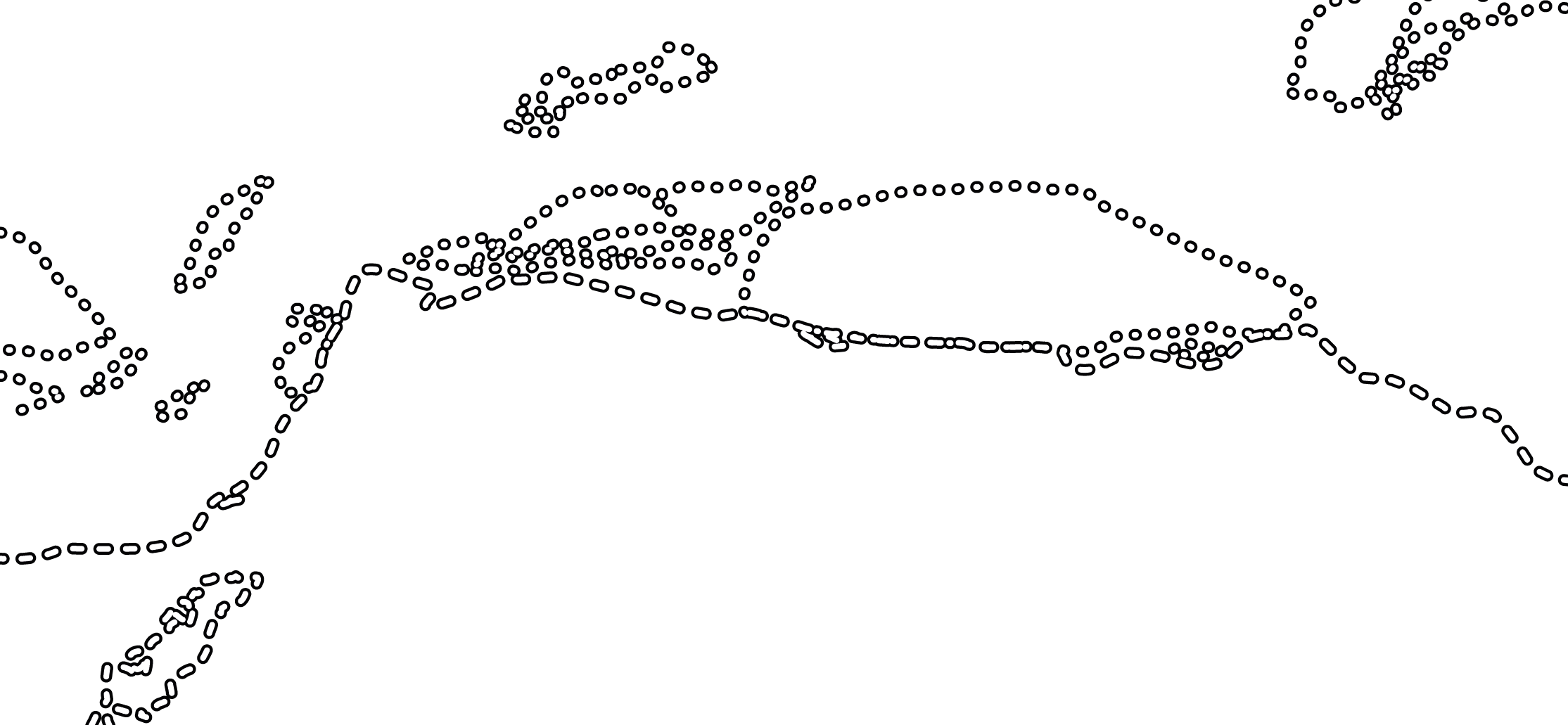
Relationship between stepped shear veins and anastomosing “capillary” veinlets
Interpreted SEM-BSE image showing the relationship between a stepped shear vein and the anastomosing “capillary” veinlets.
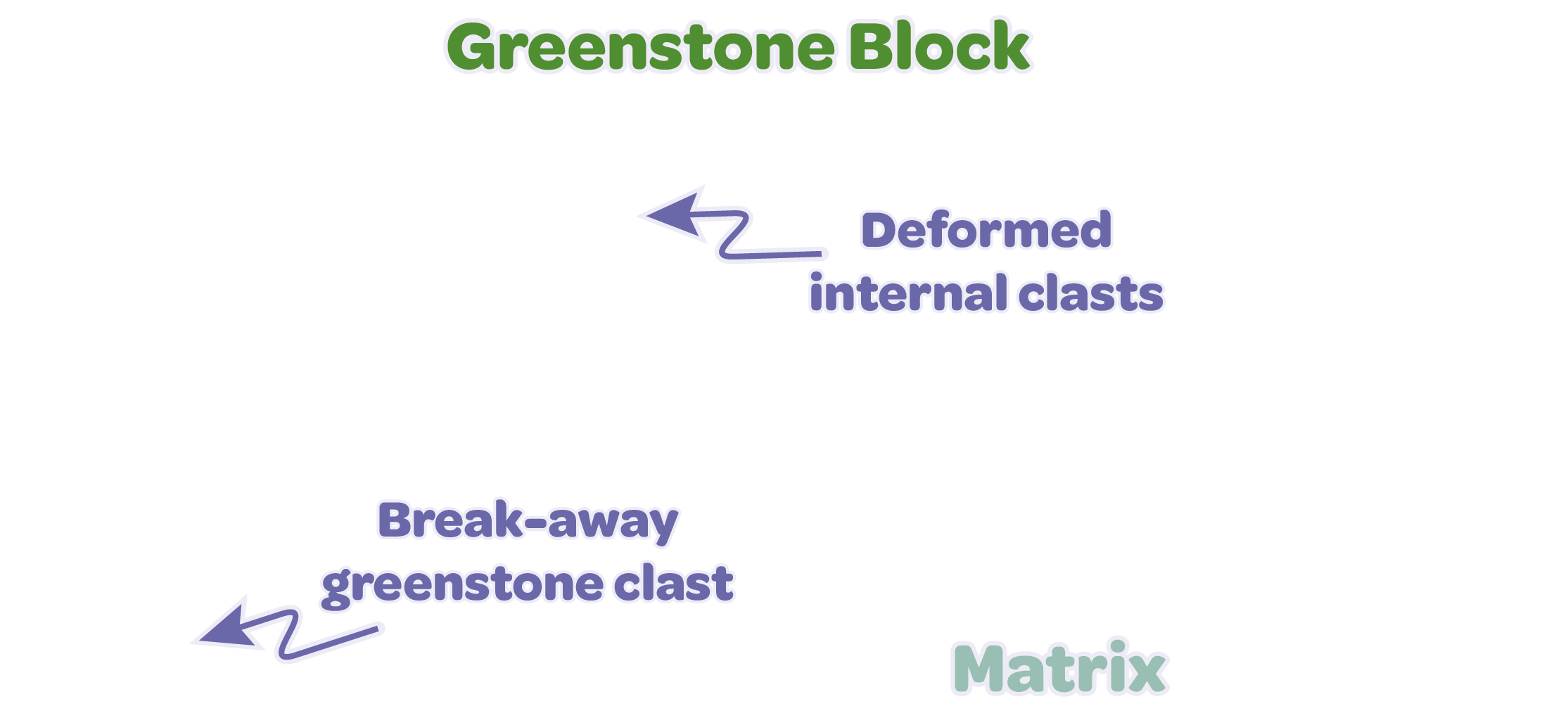
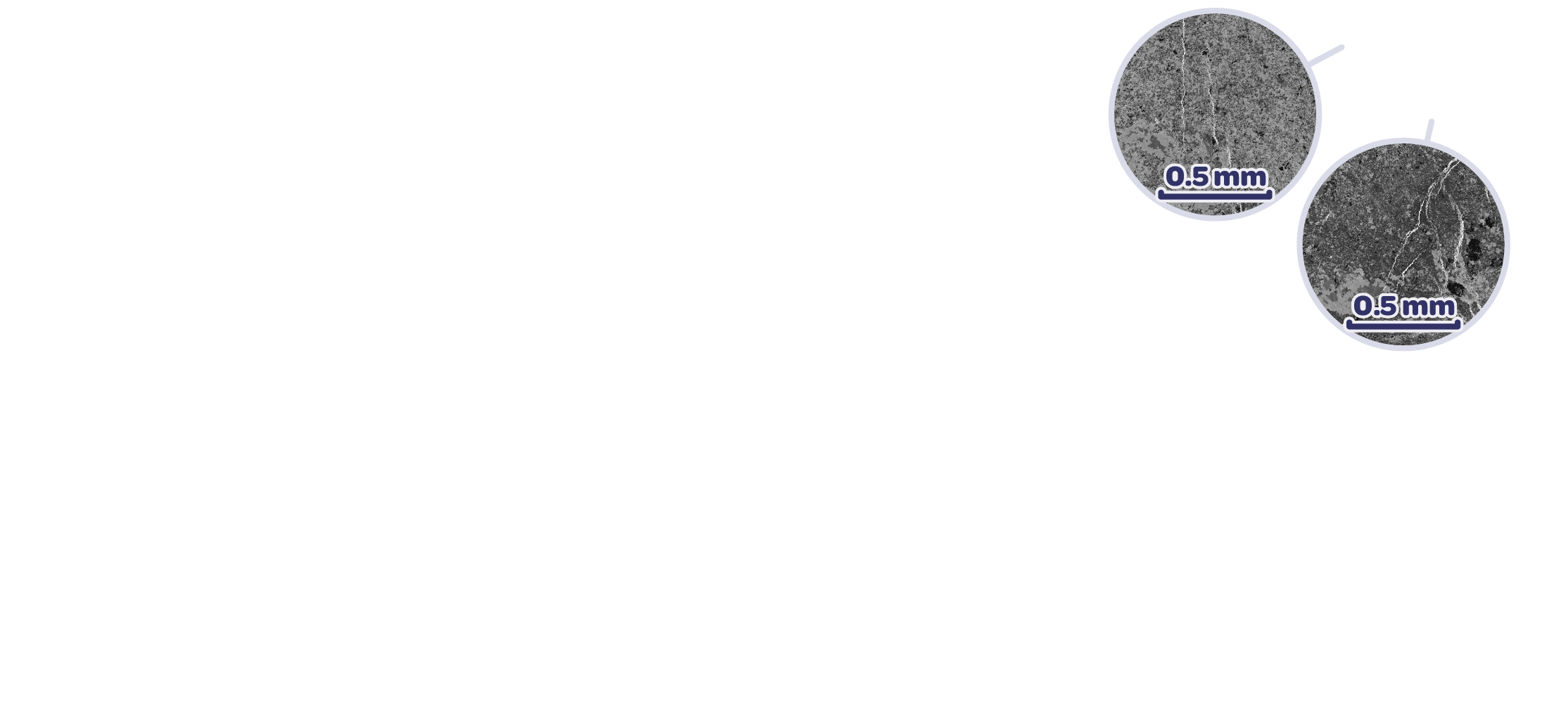
Altered basalt block with brecciated texture over-printed by alteration.
Interpreted SEM-BSE image of altered basalt block showing brecciated texture over-printed by alteration. Fragments of altered basalt show pinch-and-swell & intermingling textures. Insets show relict crystalline texture within internal clast core whereas outside clasts the greenstone is almost entirely altered to clay.
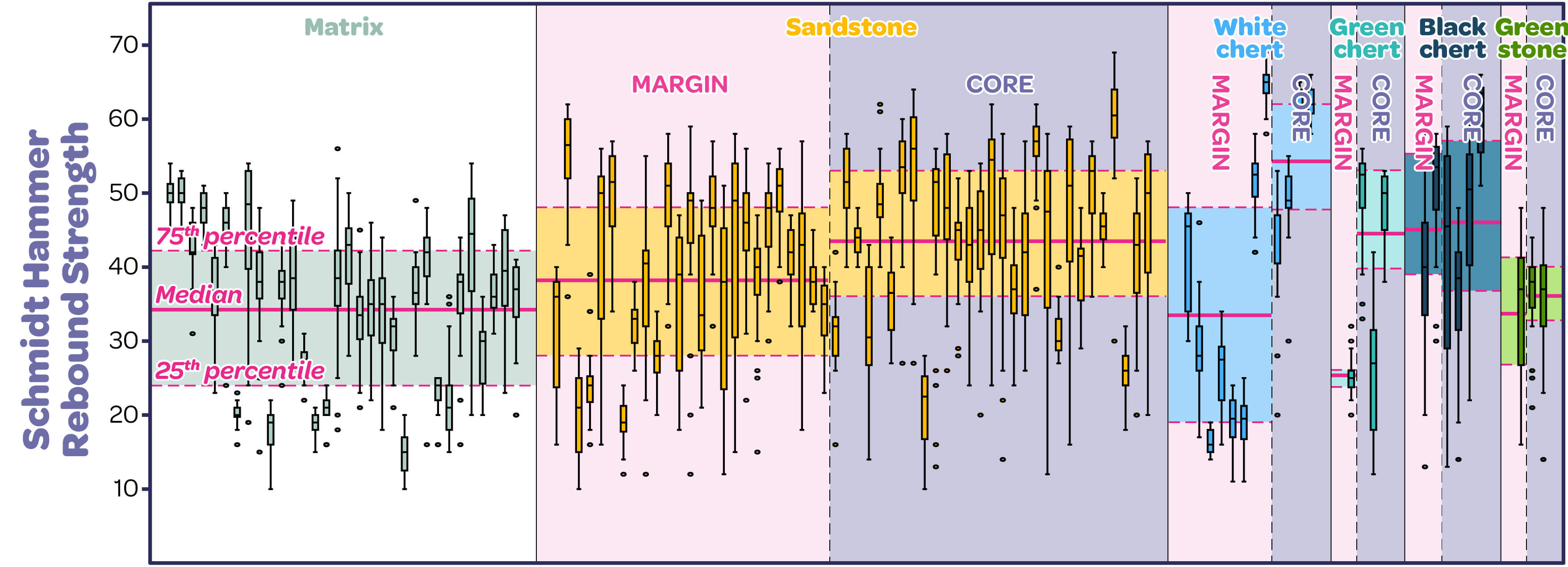
In-situ Schmidt rebound hammer strength results
In-situ Schmidt rebound hammer strength results show
Chystalls Beach, New Zealand
Chrystalls Beach Mélange, New Zealand
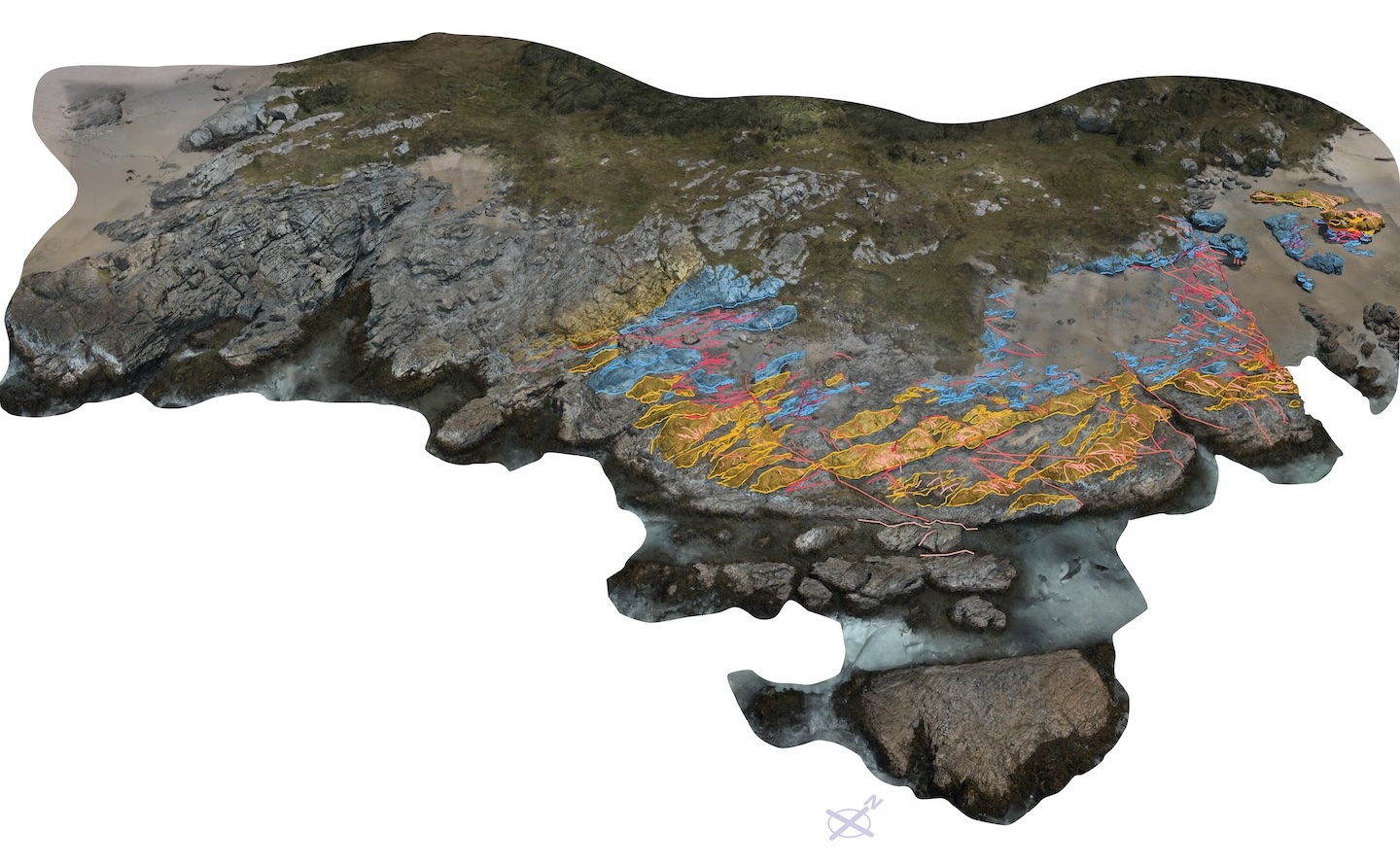
Interpreted outcrop model from the Chrystalls Beach Mélange
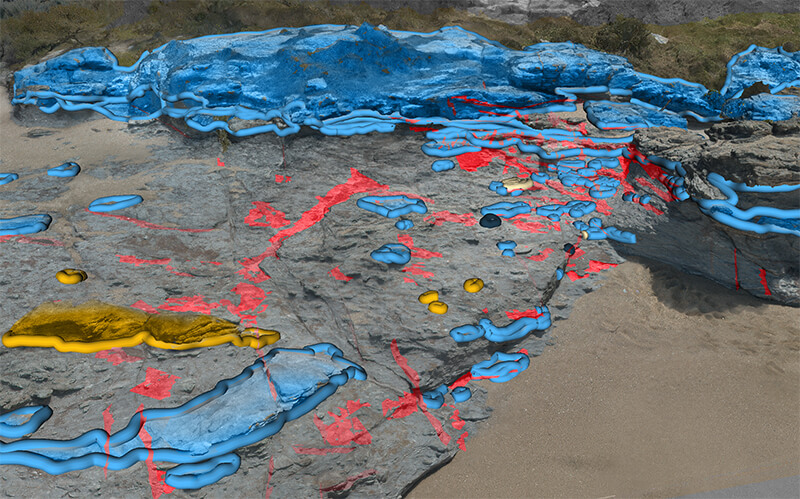
Interpreted outcrop model from the Chrystalls Beach Mélange, New Zealand, showing sandstone (yellow) and chert (blue) blocks cut by an anastomosing network of veins and fractures (red and pink).
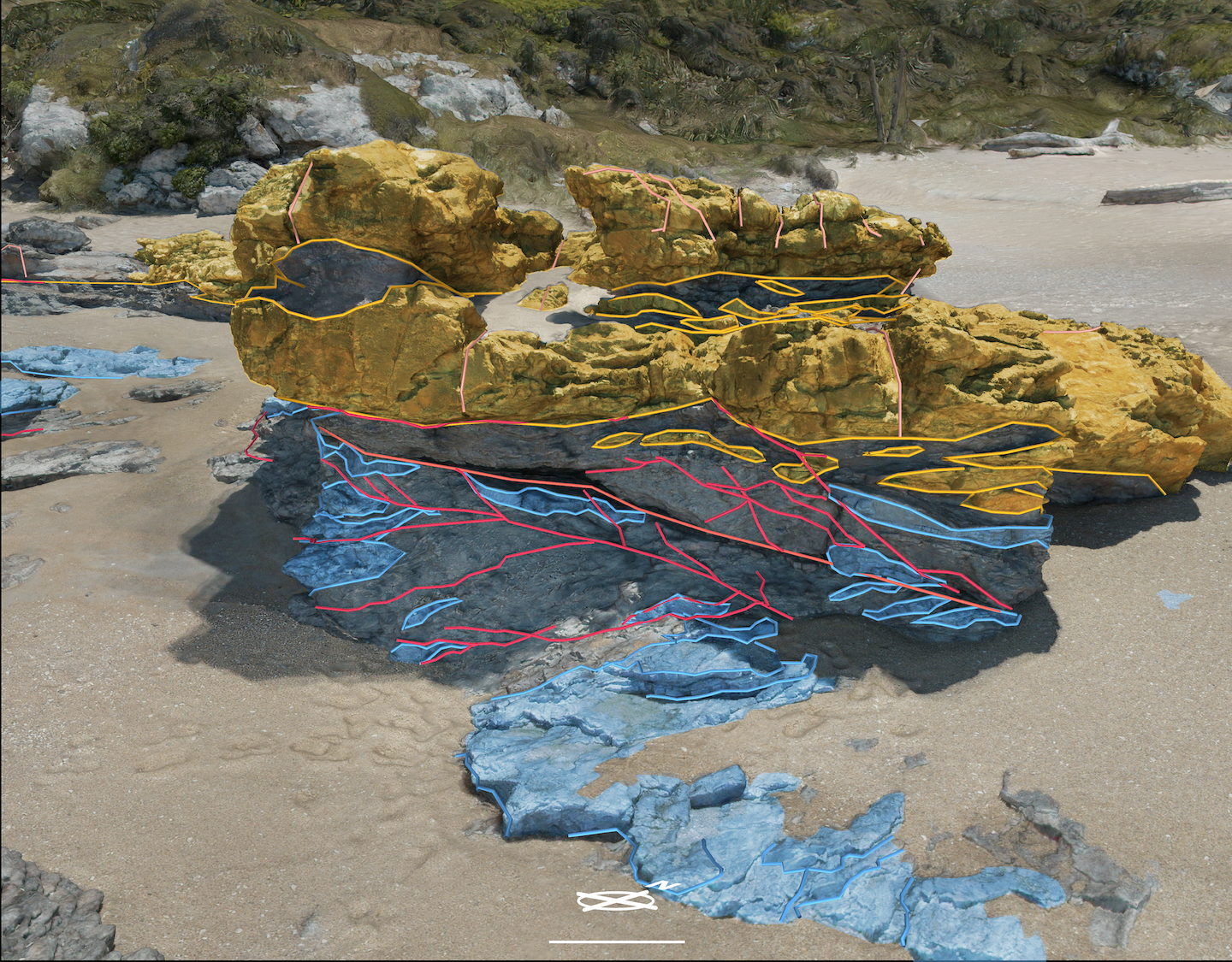
Interpreted outcrop model from the Chrystalls Beach Mélange
Interpreted outcrop model from the Chrystalls Beach Mélange, New Zealand, showing sandstone (yellow) and chert (blue) blocks cut by an anastomosing network of veins and fractures (red and pink).
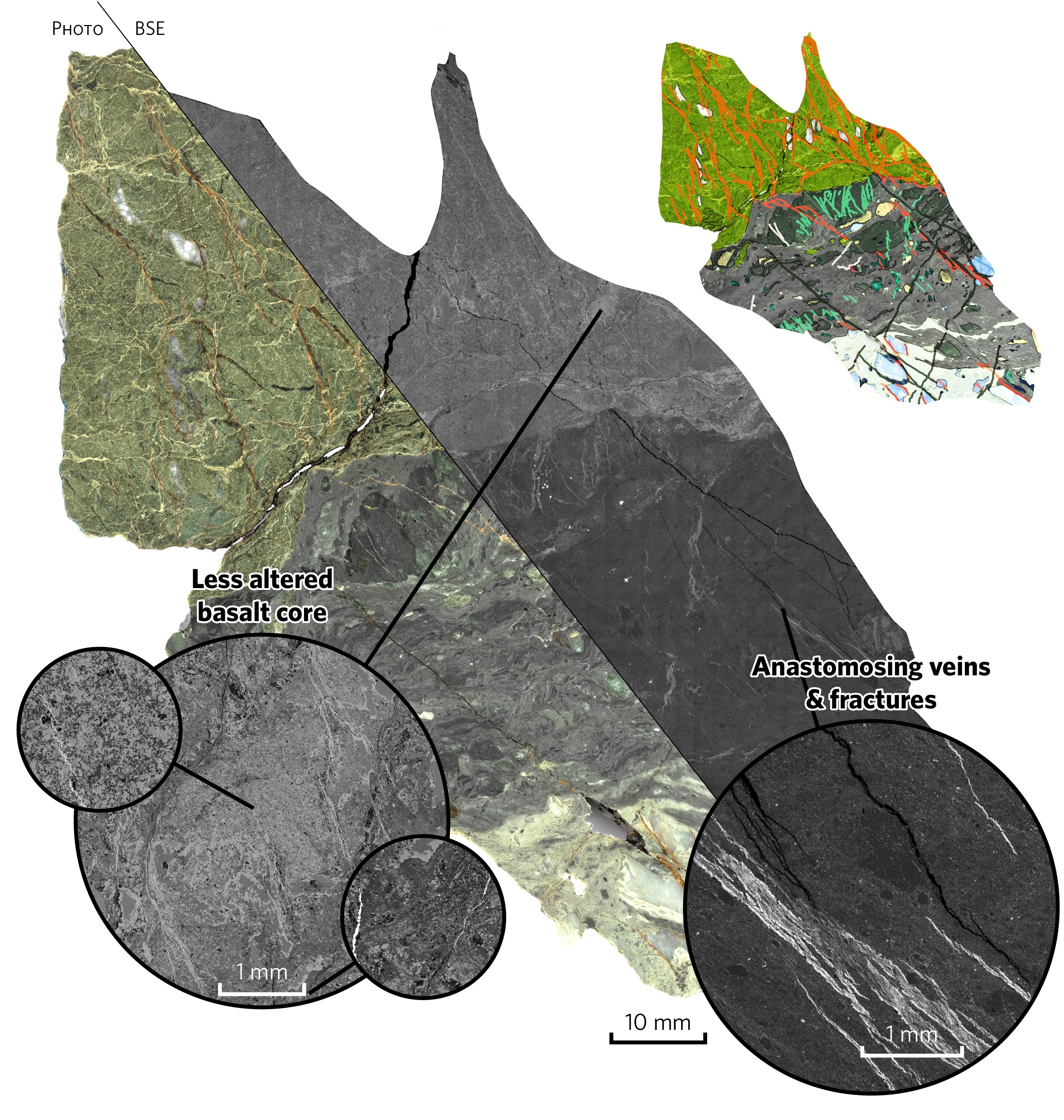
Altered Basalt Block and Matrix Contact
Polished sample photo and SEM-BSE map of the contact between an altered basalt block and its surrounding mudstone matrix revealing pervasive brecciation and alteration of the basalt and lozenge-shaped fragments of altered basalt within the matrix.
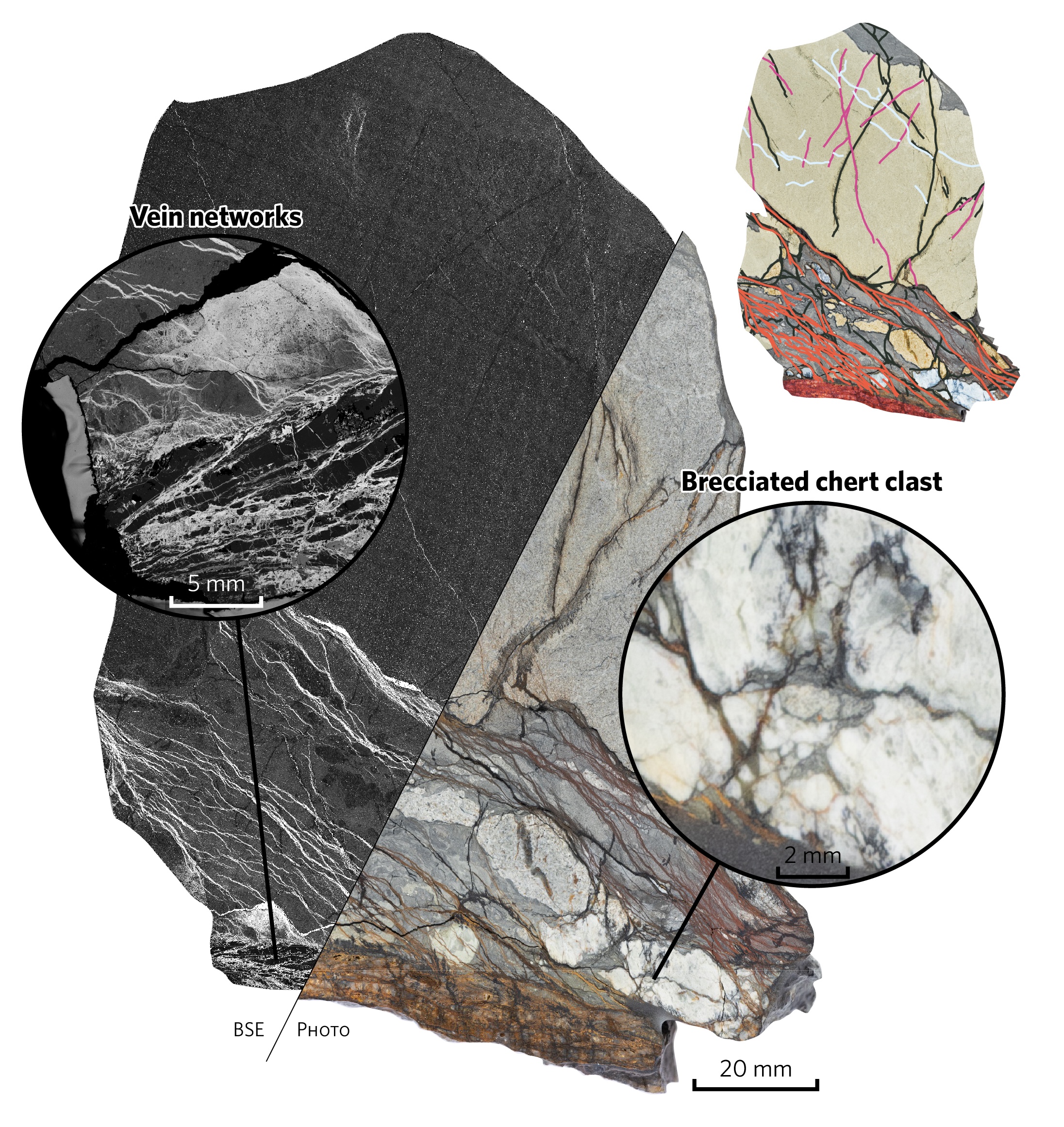
Sandstone Block and Matrix Contact with Laminated Vein
Polished sample photo and SEM-BSE map of the contact between a sandstone block and its surrounding mudstone matrix. The lower edge of the sample shows a laminated vein which was observed in the field to be part of a pervasive anastomosing network. Coming off this thick vein is another anastomosing network of thin veins.
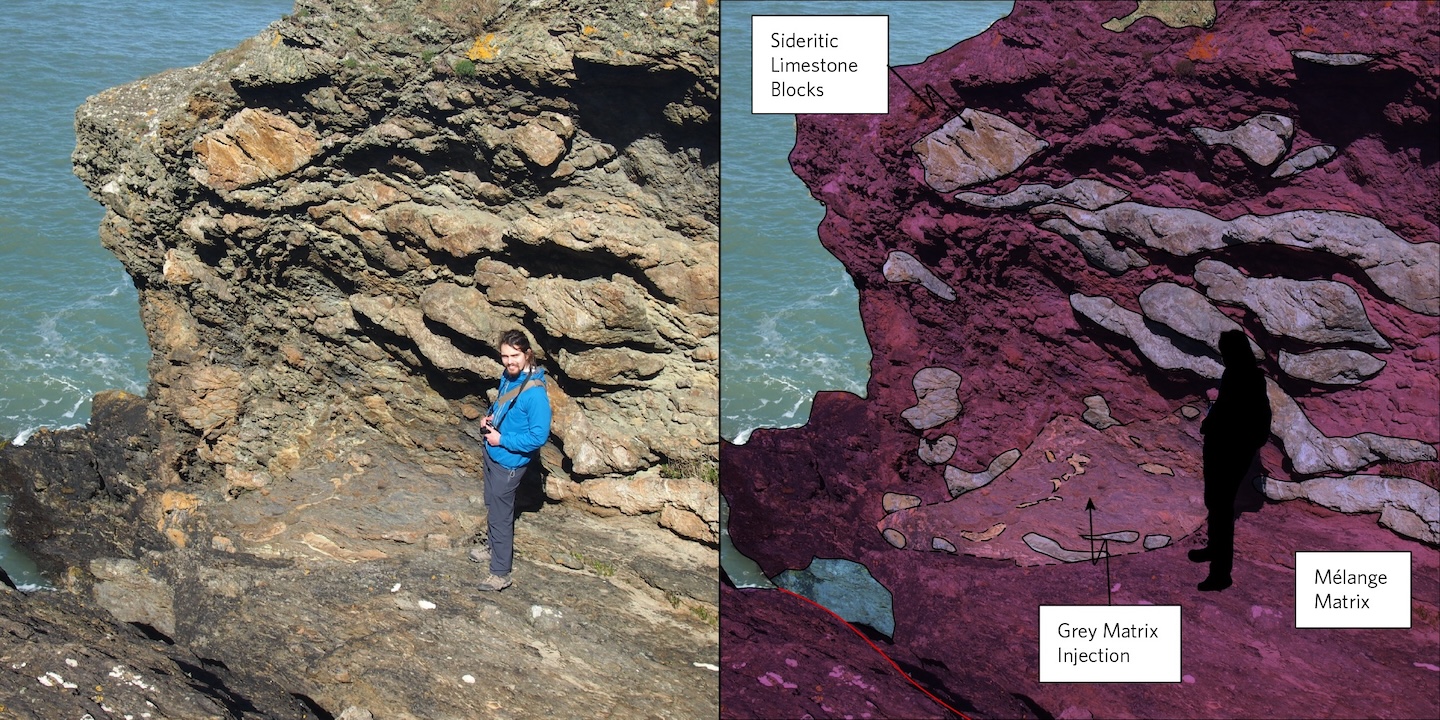
Block-in-Matrix Structure in the Gwna Mélange
Field photo of the block-in-matrix texture of the Gwna Mélange on Anglesey, Wales.
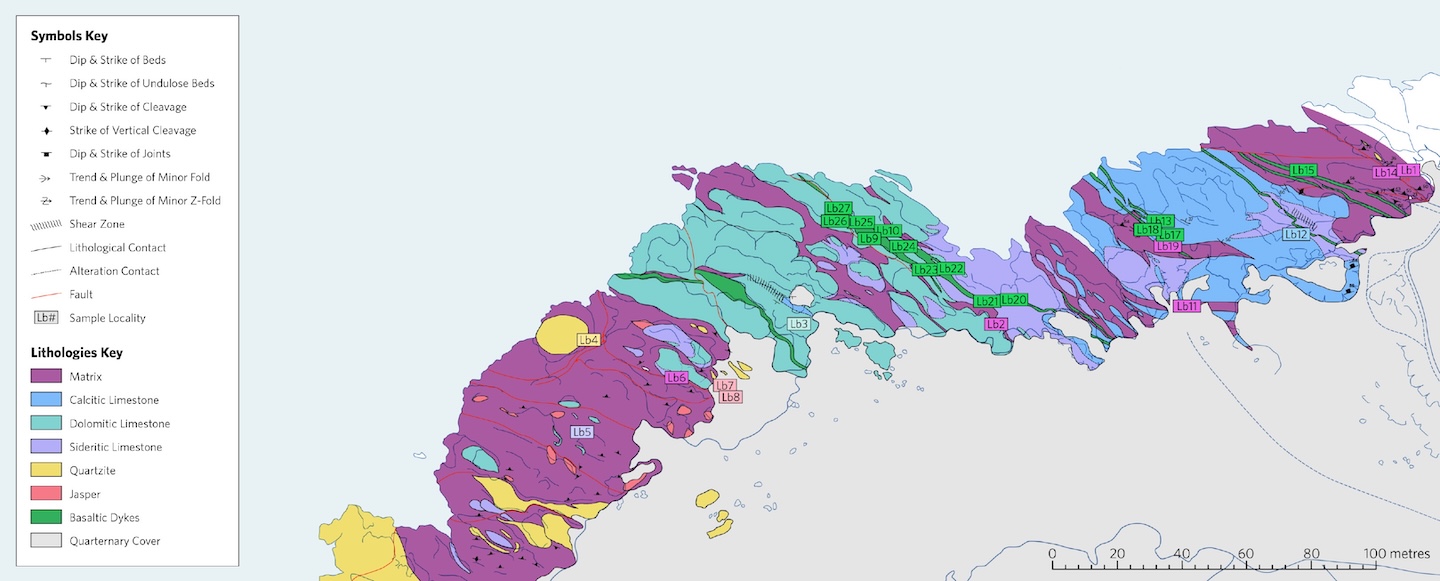
Geological Map of Gwna Mélange at Llanbadrig
Detailed geological map of the Gwna Mélange at Llanbadrig, Anglesey, Wales.